10 Challenges Women Veterans Face (And How to Overcome Them)
Women veterans face unique challenges after military service. From healthcare to employment, learn the top 10 issues female veterans encounter and practical solutions to overcome them.
Women have served in the United States military in various capacities for centuries, breaking barriers and demonstrating immense courage and dedication. As they transition from military service to civilian life, women veterans face a unique set of challenges that differ from those of their male counterparts. Recognizing these hurdles is the first step toward building a supportive environment where they can thrive.
This post explores ten significant challenges women veterans encounter and offers practical advice and resources for overcoming them. Whether you are a woman veteran seeking support or an ally wanting to help, this guide provides actionable steps for navigating the post-service landscape.
1. Transitioning to Civilian Identity
Many veterans struggle with the shift from a highly structured military environment to the ambiguity of civilian life. For women, this can be compounded by societal expectations and a feeling of invisibility. Military identity is strong and all-encompassing. Losing that can feel like losing a part of oneself.
How to Overcome It:
Find a New Community: Connect with other women veterans who understand your experience. Organizations like The Mission Continues and Team Red, White & Blue offer service platoons and events that bring veterans together for community projects and physical activities.
Redefine Your Purpose: Military service provides a clear sense of purpose. In civilian life, you have the opportunity to define a new one. Explore hobbies, volunteer for causes you care about, or pursue further education. This helps build a new identity that honors your past while looking toward the future.
Translate Your Skills: Learn to articulate your military experience in civilian terms. A "squad leader" is a "team manager." "Logistics coordination" is "supply chain management." This reframing helps you and potential employers see the value you bring.
2. Accessing Gender-Specific Healthcare
The Department of Veterans Affairs (VA) has made significant strides in providing care for women, but gaps remain. Many VA facilities were originally designed for a predominantly male population, leading to challenges in accessing comprehensive women's health services, including gynecological, prenatal, and specialized mental health care.
How to Overcome It:
Know Your Benefits: Familiarize yourself with the services available through the VA. Every VA medical center now has a Women Veterans Program Manager to help you navigate the system and coordinate care.
Advocate for Yourself: Don't hesitate to ask for what you need. If a particular service isn't available at your local VA, inquire about community care options, where the VA covers treatment from a private provider.
Use Designated Resources: The VA's Women Veterans Health Care program offers a wealth of resources, including telehealth services, maternity care coordination, and support for chronic conditions.
3. Dealing with Military Sexual Trauma (MST)
Military Sexual Trauma (MST) refers to experiences of sexual assault or repeated, threatening sexual harassment that occurred during military service. While men can also experience MST, women are disproportionately affected. The impact of MST can be long-lasting, contributing to PTSD, depression, and other mental health conditions.
How to Overcome It:
Seek Specialized Treatment: The VA provides free, confidential counseling and treatment for mental and physical health conditions related to MST. You do not need to have a service-connected disability rating to access these services.
Find a Support Group: Connecting with other survivors can be incredibly healing. The VA and other veteran service organizations (VSOs) offer MST-specific support groups where you can share your experience in a safe environment.
Report and Document: If you are comfortable doing so, reporting the incident can be an empowering step. Even if you choose not to, documenting your experience for a VA disability claim can ensure you receive the benefits you are entitled to.
4. Overcoming Stereotypes and Misconceptions
When people think of a "veteran," they often picture a man. This can lead to women veterans feeling invisible or having their service questioned. They may face comments like, "You don't look like a veteran," which can be invalidating and frustrating.
How to Overcome It:
Own Your Story: Be proud of your service. Your experience is valid and important. Correcting misconceptions can be tiring, but it also helps change public perception one conversation at a time.
Connect with Fellow Women Veterans: Finding a community that sees and acknowledges your service can counteract feelings of invisibility. Sharing stories with others who "get it" is a powerful form of validation.
Wear Your Veteran Status Proudly: If you're comfortable, wearing a hat, pin, or shirt that identifies you as a veteran can help normalize the image of women in this role.
5. Balancing Work and Family Life
Like many working women, women veterans often juggle the responsibilities of a career and family. However, they may also be dealing with service-related injuries, mental health conditions, or the unique challenges of being a single parent, which is more common among women veterans than their civilian counterparts.
How to Overcome It:
Build a Strong Support System: Lean on family, friends, and fellow veterans. Don't be afraid to ask for help with childcare, errands, or simply for someone to talk to.
Seek Flexible Employment: Look for employers who offer flexible work schedules, remote work options, or family-friendly policies. Many companies with veteran hiring initiatives understand the need for a healthy work-life balance.
Prioritize Self-Care: You cannot pour from an empty cup. Make time for activities that recharge you, whether it's exercise, meditation, or a hobby. Self-care is not a luxury; it's essential for managing stress.
6. Higher Rates of PTSD and Mental Health Issues
Women veterans are more likely to be diagnosed with Post-Traumatic Stress Disorder (PTSD) than their male counterparts. This is often linked to higher rates of MST, but combat exposure and the stress of navigating a male-dominated culture also play a role.
How to Overcome It:
Acknowledge the Symptoms: PTSD symptoms can include flashbacks, anxiety, emotional numbness, and difficulty sleeping. Recognizing these signs is the first step toward getting help.
Explore Therapy Options: The VA offers various evidence-based therapies for PTSD, such as Cognitive Processing Therapy (CPT) and Prolonged Exposure (PE). Find a therapist you trust and a modality that works for you.
Consider Peer Support: Sometimes, the most effective support comes from someone who has walked in your shoes. Programs like Vets4Warriors connect you with a fellow veteran for confidential peer support.
7. Finding Meaningful Employment
While many employers are eager to hire veterans, they may not understand how military skills translate to civilian jobs. Women veterans can face the double bind of gender bias and misconceptions about military service, making the job search even more difficult.
How to Overcome It:
Use Veteran-Specific Job Resources: Websites like Hire Heroes USA, VetJobs, and the Department of Labor's VETS program offer job boards and career counseling specifically for veterans.
Network Strategically: Attend job fairs for veterans and connect with other professionals on platforms like LinkedIn. Informational interviews can be a great way to learn about an industry and get your foot in the door.
Work with a Mentor: A mentor can provide guidance on resume writing, interview skills, and navigating corporate culture. American Corporate Partners (ACP) offers a fantastic mentorship program that pairs veterans with professionals from top companies.
8. Financial Instability
The transition to civilian life can bring financial stress. Finding a job that matches military pay can be difficult, and many veterans face housing insecurity or homelessness. Women veterans, particularly those who are single mothers, are the fastest-growing segment of the homeless veteran population.
How to Overcome It:
Create a Transition Budget: Before leaving the service, create a detailed budget that accounts for housing, utilities, food, and other expenses.
Access Financial Assistance Programs: Organizations like Final Salute Inc. and the VA's Supportive Services for Veteran Families (SSVF) program provide financial assistance and housing support to prevent and end homelessness among veterans.
Seek Financial Counseling: The VA offers free financial counseling to help you manage debt, build credit, and plan for your financial future.
9. Dealing with Service-Related Injuries and Pain
Chronic pain from service-related injuries is a significant issue for many veterans. Women may experience different types of injuries or have their pain dismissed or misdiagnosed more frequently than men.
How to Overcome It:
Pursue a Comprehensive Pain Management Plan: Work with your VA provider to develop a holistic plan that may include physical therapy, medication, and alternative treatments like acupuncture or yoga.
Document Everything: Keep a detailed record of your pain, symptoms, and the treatments you've tried. This information is crucial for your healthcare and for any disability claims.
Connect with Adaptive Sports Programs: Programs like the National Disabled Veterans Winter Sports Clinic can help you stay active and connect with other veterans managing physical injuries.
10. Risk of Homelessness and Lack of Housing
As mentioned, women veterans are at a higher risk of homelessness than their non-veteran peers. A lack of affordable housing, combined with challenges like unemployment, mental health issues, and being a single parent, creates a perfect storm.
How to Overcome It:
Contact the National Call Center for Homeless Veterans: If you are at risk of homelessness, call 1-877-4AID-VET (1-877-424-3838) for immediate assistance.
Explore VA Housing Programs: The HUD-VASH program combines HUD housing vouchers with VA supportive services to help homeless veterans and their families find and sustain permanent housing.
Reach Out to Community Organizations: Many local and national organizations provide transitional housing and support services specifically for women veterans and their children.
A Call to Action
The journey from military service to civilian life is complex, but no woman veteran has to walk it alone. The resources and communities available are vast and ready to help.
If you are a woman veteran facing these or other challenges, reach out. Contact your local VA, connect with a veteran service organization, or find a peer support group. Your service was valuable, and you deserve a successful and fulfilling civilian life.
If you are a civilian, you can make a difference. Hire women veterans. Listen to their stories. Advocate for better services and support programs. By working together, we can ensure that every woman who served our country is honored, supported, and empowered to thrive.
What's Next for CAPT JANE: Year Two and Beyond
What's Next for CAPT JANE: Year Two and Beyond
Meta Description: Discover what's coming next for CAPT JANE in year two. New military veteran collections, expanded first responder apparel, women's empowerment lines, and our vision for celebrating women in service. Women-owned, veteran-owned business growth plans.
Keywords: women veteran apparel future, military women's clothing expansion, female first responder apparel, women-owned business growth, veteran-owned business plans, Navy veteran collection women, Air Force veteran apparel women, Coast Guard women's clothing
Introduction: From Vision to Reality
One year ago, CAPT JANE launched on Veterans Day 2024 with a bold mission: to create premium apparel that honors women veterans and female first responders while celebrating their femininity. What started as an idea from female military officers has grown into a thriving women-owned, veteran-owned business serving thousands of women in service nationwide.
But we're just getting started.
As we celebrate our first anniversary, we're excited to share what's next for CAPT JANE. From expanding our military veteran collections to honoring more female first responders, year two is about reaching MORE women who deserve recognition, representation, and apparel designed specifically for them.
Here's our roadmap for the future.
Expanding Military Veteran Collections: Honoring Every Branch
Navy Veteran Collection for Women (Coming Q4 2025)
Status: In Development | Launch: Early 2026
Women have served in the U.S. Navy since 1908, breaking barriers from the decks of hospital ships to the cockpits of fighter jets. Our Navy Veteran Collection will honor every woman who earned the anchor.
What to Expect:
Women's Navy Veteran T-Shirts - Comfortable cotton with elegant "Navy" script and "Veteran" bold typography
Women's Navy Veteran Hoodies - Premium fleece featuring anchor and dog tag designs
Women's Navy Veteran Long Sleeves - Year-round comfort for female sailors
Specialty Designs - Honoring Navy nurses, pilots, surface warfare officers, submariners, and more
Design Philosophy: Navy gold and black color schemes representing service and strength, with nautical elements celebrating the maritime tradition women Navy veterans embody.
Why It Matters: Women comprise approximately 20% of the Navy, yet most Navy veteran apparel is designed for men. Female sailors deserve clothing that fits their bodies and honors their unique service experience—from serving on ships to pioneering roles women have only recently been allowed to fill.
Air Force Veteran Collection for Women (Coming Q4 2025)
Status: Design Phase | Launch: Mid-2026
Since the Women's Auxiliary Ferrying Squadron (WAFS) in 1942, women have soared in Air Force service. Our Air Force Veteran Collection celebrates female airmen who've served from the ground to the stratosphere.
What to Expect:
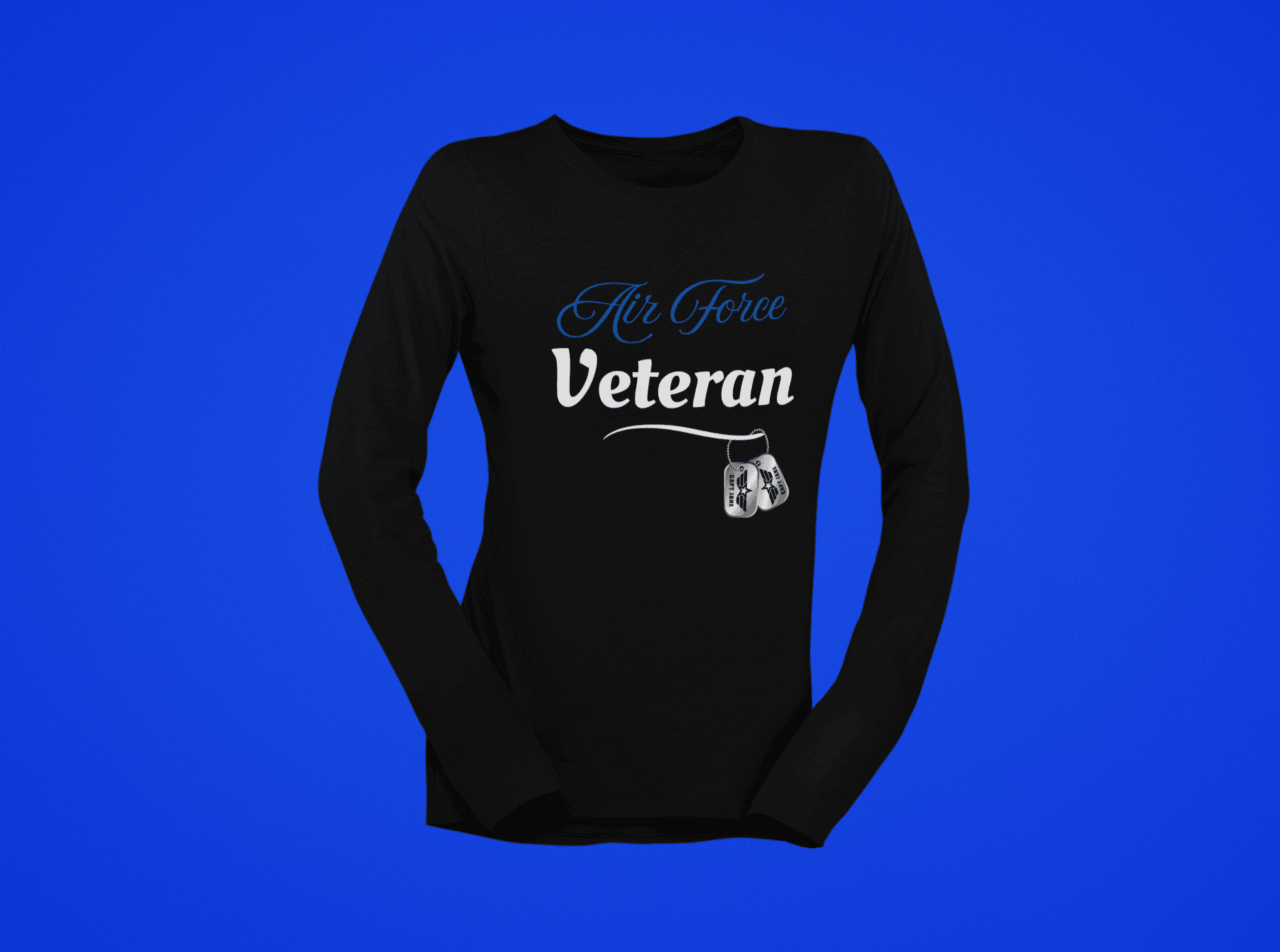
Women's Air Force Veteran T-Shirts - Breathable fabric perfect for active women veterans
Women's Air Force Veteran Sweatshirts - Cozy comfort with aviation-inspired designs
Women's Air Force Veteran Hoodies - Premium quality for female airmen
Pilot-Specific Designs - Honoring women Air Force pilots and aviators
Support Role Recognition - Celebrating maintainers, logistics, cyber, and all career fields
Design Philosophy: Sleek, modern designs incorporating Air Force blue and silver, with wing motifs and aviation elements representing women who've served in the wild blue yonder.
Why It Matters: Women Air Force veterans include pilots, navigators, engineers, cyber specialists, and countless other roles. They've broken altitude barriers and glass ceilings simultaneously. They deserve apparel that recognizes their specific contributions to air and space superiority.
Coast Guard Veteran Collection for Women (Coming Q1 2026)
Status: Concept Development | Launch: Late 2026
The Coast Guard has included women since 1918, with female service members serving in every Coast Guard mission from search and rescue to maritime law enforcement. Our Coast Guard Veteran Collection honors these often-overlooked heroes.
What to Expect:
Women's Coast Guard Veteran T-Shirts - Comfortable apparel for Coasties
Women's Coast Guard Veteran Hoodies - Maritime-inspired designs
Women's Coast Guard Long Sleeves - Honoring the "Always Ready" motto
Rescue Swimmer Recognition - Celebrating elite female rescue swimmers
Maritime Enforcement Designs - Honoring women in law enforcement roles
Design Philosophy: Coast Guard red, white, and blue with maritime rescue elements, anchors, and lifesaving imagery representing the humanitarian service women Coast Guard veterans provide.
Why It Matters: The Coast Guard is the smallest military branch but has one of the highest percentages of women service members. Female Coasties perform dangerous rescues, enforce maritime law, and protect our shores—often without the recognition they deserve. They need apparel that celebrates their unique service.
Space Force Veteran Collection for Women (Coming 2026)
Status: Future Planning | Launch: 2027
The newest military branch already includes women in critical roles. As the first women Space Force members transition to veteran status, we'll be ready to honor them.
What to Expect:
Women's Space Force Veteran Apparel - Futuristic designs for pioneering women
Guardian Recognition - Honoring the first female Guardians
Space Operations Designs - Celebrating women protecting space assets
Technology-Forward Aesthetics - Modern designs for the modern military branch
Design Philosophy: Sleek, futuristic designs incorporating space imagery, constellation patterns, and forward-thinking aesthetics representing women pioneering in space operations.
Why It Matters: Women Space Force members are writing history in real-time. As these trailblazers transition to veteran status, they deserve apparel that recognizes their role in establishing America's newest military branch.
Expanded First Responder Collections: Honoring Women Who Serve at Home
Female Police Officer Apparel (Coming Q1 2026)
Status: In Development
Women police officers face unique challenges in male-dominated departments while protecting communities daily. Our Female Police Officer Collection celebrates their courage, dedication, and service.
What to Expect:
"Protect & Serve" Women's T-Shirts - Honoring female law enforcement
Women's Police Pride Hoodies - Thin blue line designs for women officers
Detective & Investigator Apparel - Recognizing specialized roles
K9 Officer Recognition - Celebrating female K9 handlers
Women in Leadership Designs - Honoring female chiefs and commanders
Design Philosophy: Strong, authoritative designs incorporating thin blue line imagery, badges, and law enforcement symbols while maintaining feminine aesthetics.
Target Audience:
Active duty female police officers
Retired women law enforcement
Female detectives and investigators
Women correctional officers
Police department support staff